
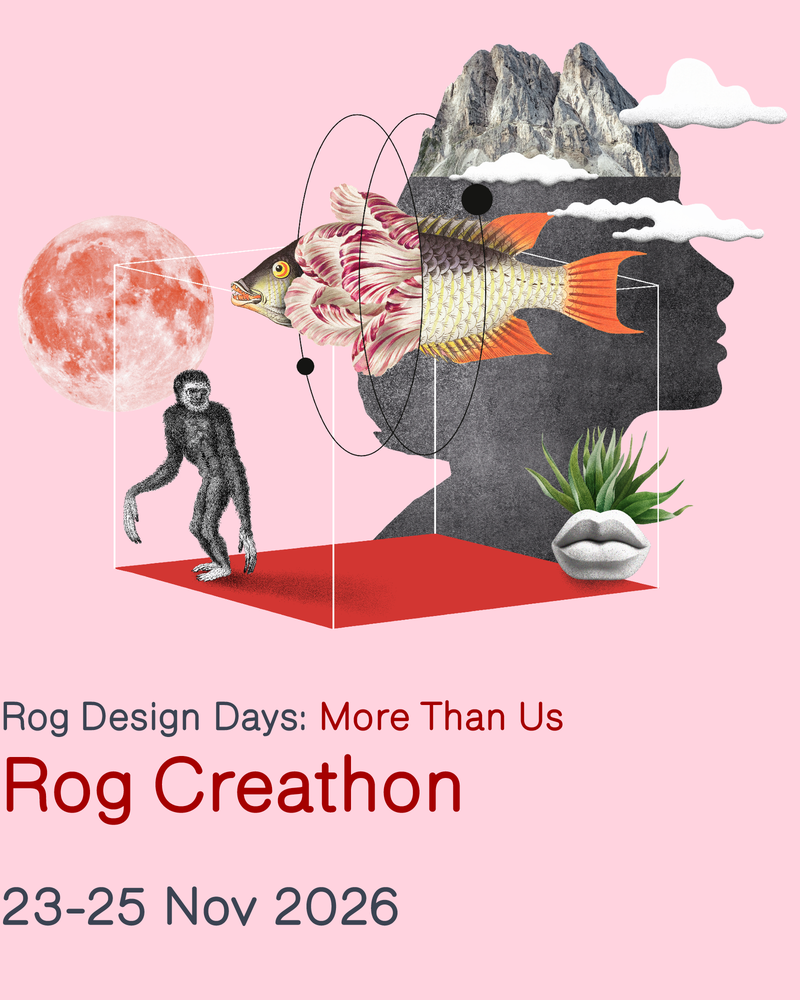
About Center Rog
Center Rog in Ljubljana, is the largest production hub in Europe catering to amateur makers and professionals in applied arts, design, crafts, and architecture, with a strong focus on sustainable development. Inaugurated in October 2023 and located in a revitalized bicycle factory in the centre of Ljubljana, the hub offers 8,500 m² of shared production space, with 9 production labs, 20 free-of-charge studios for creatives developing sustainable products, 5 residential apartments, an exhibition hall, shops for local designers, and indoor and outdoor public spaces open to everyone.
About the challenges
How does it work and what will we do?
What happens when, for a moment, we stop designing just for ourselves? When we take into account plants, animals, ecosystems, future generations, or even artificial intelligence while developing solutions? This year’s Rog Kreaton invites you to look beyond the human perspective and take on challenges under the shared theme More Than Us.
This intensive collaborative event is a great opportunity to explore creative approaches to problem-solving and innovative design together with renowned international mentors—all within the inspiring environment of Europe’s largest creative hub.
Rog Kreaton features five different challenges led by internationally recognized mentors from various fields—from product design and architecture to textile design and interdisciplinary projects. Throughout the process, technologists and the heads of our production labs will also be available to support you.
Five teams, each consisting of five selected participants, will take on the challenges. Each team will receive:
- a box of materials,
- 10 hours of daily access to nine different labs, where you can use machines and tools and receive additional mentorship,
- 48-hour access to a workspace for assembling and developing prototypes.
At the end of the sprint, teams will present their prototypes to an expert jury, and the winning team will be announced at the opening ceremony of the Rog Expo exhibition on 25 November at 7:00 PM.
All teams will also have the opportunity to:
- present their work at the Rog Expo exhibition,
- share their results with the international professional community at the Rog Design Days festival.
Who can apply and how?
Eligibility: Rog Creathon is open to all creative individuals aged 18 to 30, from any background or discipline.
How to Apply: to apply, simply fill out the online application form (link below) and include a short video presentation (max. 3 minutes) introducing yourself and sharing what motivates you to participate.
Application fee: None
Application deadline: Tuesday, 6 October 2026
Number of participants selected: 25 (5 per challenge)
What do I get if I get selected:
- Free accommodation at Hostel Celica (Ljubljana’s top-rated hostel, just 5 minutes from Center Rog) from 23–27 November 2026 (for international and out-of-town Slovenian participants)
- Free participation in Rog Creathon, including meals during the event: 23–25 November 2026
- Free entry to Rog Forum (26–27 November 2026), including meals
- Access to all 9 production labs, mentorship, materials, and a vibrant creative environment
Are there Awards? Absolutely!
Winning Team Prizes
- For Slovenian participants living in Ljubljana: One-year Center Rog membership and user package
- For international and out-of-town Slovenian participants: A two-week residency at Center Rog (between January and July 2027) with full access to production labs
For all participants:
- Your team’s work will be showcased at the Rog Expo international exhibition (25 November 2026 – 8 February 2027)
- You’ll receive a certificate of participation in Rog Creathon
- Plus, a reference certificate acknowledging your contribution to the exhibition
Timeline
- Application Deadline: Tuesday, 6 October 2026
- Notification of Selection: By Tuesday, 13 October 2026
- Early November: Online meeting with mentors & challenge presentation
- Sunday, 22 November: Arrival in Ljubljana & check-in at Hostel Celica (for foreign participants)
- Monday, 23 November: 09:00 – Registration; 09:30 – Tour of facilities; 10:00 – Official start of Rog Creathon
- Wednesday, 25 November: 10:00 – End of Rog Creathon & setup of results in the exhibition space; 11:00 – Presentation of results to the jury; 19:00 – Official opening of Rog Expo & announcement of winners
- Thursday–Friday, 26–27 November: Rog Forum (international conference); Friday afternoon: Farewell drink
- Saturday, 28 November: Departure of participants
For more information contact us at Valeria.Citterer@center-rog.si
Curious about last year’s RogDesignDays?
Check out the last years Rog Creathon highlights and the exhibition opening video! HERE is the last years programme.
5 Designer Challenges
CHALLENGE 1: BIO-LUXURY – HIGH-END TEXTILES FROM BIOMATERIALS FOR HIGH FASHION
Challenge mentor: Matea Benedetti, fashion designer, Benedetti Life (Slovenia)
Rog mentors: Uroš Topić (Textile Lab), Maruša Ramšak (Green Lab)
Labs: Textile Lab, Green Lab
Challenge description:
This challenge focuses on exploring the potential of biomaterials and other natural, sustainable, and biodegradable materials in the context of high fashion. Participants will experiment with materials that are still not widely used in the fashion industry, such as kombucha leather, materials derived from pineapple and apple fibers, and other natural composites, and investigate their aesthetic and structural possibilities through various textile manipulation techniques.
Challenge objective:
Based on your research, you will develop an aesthetically refined and innovative high-end textile for the creation of a corset as a universal “red carpet” fashion piece. You will use techniques such as embroidery, sewing, laser cutting, handcrafting, and AI visualization, demonstrating that sustainable materials can achieve the same level of luxury, sophistication, and visual expression as conventional materials in high fashion. The challenge also encourages reflection on the environmental impact of synthetic materials and the reinterpretation of so-called “poor materials” within the context of contemporary luxury.
Materials: biomaterials (kombucha leather, pineapple- and apple-based materials, etc.), natural fibers, experimental textile composites.
CHALLENGE 2: SHARED SPACES – DESIGNING FOR MORE THAN JUST PEOPLE
Challenge mentor: Lars Petrova-Taylor, maker (Spain)
Rog mentors: Jaka Oman (Wood Lab), Tauan Bernardo (FabLab)
Labs: Wood Lab, FabLab
Challenge description:
Human-centered design has made modern life more comfortable, but at the same time it has taught us to overlook plants, pollinators, and other beings that make our existence possible. This challenge explores care- and coexistence-based design, in which humans exist within a broader network of relationships. What does such a shift look like when co-created by young people?
RogLab, a shipping container in the park in front of Centre Rog, is becoming a community café. Imagine a space where you can leave your mark, learn something new from someone you have never met, and connect with nature through a small artistic or design intervention. Design and build a multifunctional space for gathering, exchange, rest, play, and ecological care.
Challenge objective:
Develop a prototype of a shared space for care, creativity, and coexistence. As a starting point, you will use the care cycle “Take – Act – Leave a Mark – Connect”, which encourages reflection on reciprocity: how people contribute to a space, how their actions leave traces, and how a community takes shape over time.
Let the real habits of young people—the ways they socialize, rest, create, and build—guide the design process. You will also consider who cares for the space after you leave, how it is maintained and developed, and how future generations of young people can continue and reinterpret it in their own way.
Materials: wood, mixed materials from the FabLab, found objects, textiles.
CHALLENGE 3: REFUGES – ARCHITECTURES FOR OTHER INHABITANTS OF THE PARK OF THE ERASED
Challenge mentor: Guillian Graves, designer and founder of the Big Bang Project agency | Head of the Master’s program Nature-Inspired Design and Phusis Lab at ENSCI–Les Ateliers (France)
Rog mentors: Maruša Ramšak (Green Lab), Tomo Per (Ceramics Lab)
Labs: Green Lab, Ceramics Lab
Challenge description:
Just two hundred meters from Centre Rog flows the Ljubljanica River; five hundred meters away lies Tabor Park, while the roof of the former bicycle factory already hosts beehives. The surroundings of Centre Rog are not an empty space waiting to be filled, but a layered habitat already shared with thousands of non-human inhabitants that urban planning often overlooks.
The challenge invites participants to design and build five micro-refuges tailored to specific species or groups of organisms: a bat shelter, a hotel for solitary bees, support for xerophilic lichens, a dew-collecting water station, or a hedgehog shelter. Each refuge must be designed according to the biological needs of its inhabitant—from the size of openings and wall thickness to thermal properties and surface textures—and placed in a carefully selected location.
This is the first Rog Kreaton challenge in the history of the festival entirely dedicated to creating habitats for non-human inhabitants of the city.
Challenge objectives:
You will design and build five micro-refuges for selected non-human inhabitants of the Centre Rog surroundings. Each refuge must:
- combine biocomposites, ceramics, and wood as primary materials,
- include at least one living substrate from the Green Lab,
- respond through its form or material properties to the specific needs of the target species.
Materials: recycled wood and wood offcuts, clay, mycelium blocks, seeds, mosses, branches, and natural materials.
CHALLENGE 4: CONSTELLATIONS - BETWEEN BODY AND COSMOS
Challenge mentor: Sara Bologna, designer and researcher (Italy)
Rog mentors: Dalija Sega (Jewelry Lab), Brigita Gantar (Glass Lab)
Labs: Jewelry Lab, Glass Lab
Challenge description:
For most of human history, the cosmos was not understood as something that exists solely “out there.” People perceived it as a system of relationships and interconnectedness. The modern understanding of the world, however, is based on separation: hierarchies have been established, and the cosmos has been transformed from a community of subjects into a system of passive forces. In this process, something has been lost—the sense of kinship with something greater than the individual. How can we encourage a shift in perspective and design new ways to reconnect with what is “greater than us”?
This challenge invites participants to rethink the relationship between the human body and the cosmos through wearable design. In many cultures, jewelry and body adornment have not served merely as decoration; they have carried stories, beliefs, memories, and connections to worlds beyond the individual. Today, they can become a medium for reflecting on our place in the universe, which continues to inspire curiosity, awe, and imagination.
Challenge objectives:
You will design and create wearable objects or pieces of jewelry using traditional goldsmithing techniques and cold glassworking techniques. You will develop a concept inspired by a celestial body, an astronomical phenomenon, or a cosmic process, and translate it into a meaningful wearable form through the choice of materials, light, texture, and interaction with the body. The final piece should tell a clear story while also contributing to a shared “constellation” created by all participants.
Materials: brass, copper, glass, textile remnants, and other materials found in nature.
CHALLENGE 5: COMPANIONS – OBJECTS FOR HUMAN–ARTIFICIAL INTELLIGENCE RELATIONSHIPS
Challenge mentor: Alessandro Masserdotti, philosopher and interaction designer (Italy)
Rog mentors: Nuša Jurkovič (FabLab), Bart Smiths (FabLab)
Lab: FabLab
Challenge description:
Artificial intelligence is transforming the way we interact with technology. AI no longer represents just tools and assistants, but opens up the possibility of creating objects that sense their environment, respond to it, and develop meaningful relationships with people. Many of the objects we value most are not necessarily useful—they hold emotional significance. A childhood toy, a lucky charm, a souvenir, or a personal item becomes meaningful through the memories and feelings we associate with it. But what happens when these objects can also react, communicate, and express their own personality?
This challenge explores how artificial intelligence can transform passive objects into interactive companions. Using sensors, actuators, and open-source AI models that run locally on microcontrollers and computers, participants will design objects that can perceive, respond, and evolve through interaction with users.
The focus is not on creating yet another “smart” device, but on imagining new forms of emotional, symbolic, and personal connection between humans and intelligent objects. Participants are encouraged to develop projects that respect privacy, are energy-efficient, and function independently of cloud platforms.
Challenge objectives:
You will design and build a prototype of an AI-enabled object capable of forming an emotional relationship with its user. The object must be able to perceive, respond, and express its own behavior or personality through physical and/or digital interactions.
Materials: microcontrollers, sensors, actuators, open-source AI models, digital fabrication tools.
Mentors’ biographies
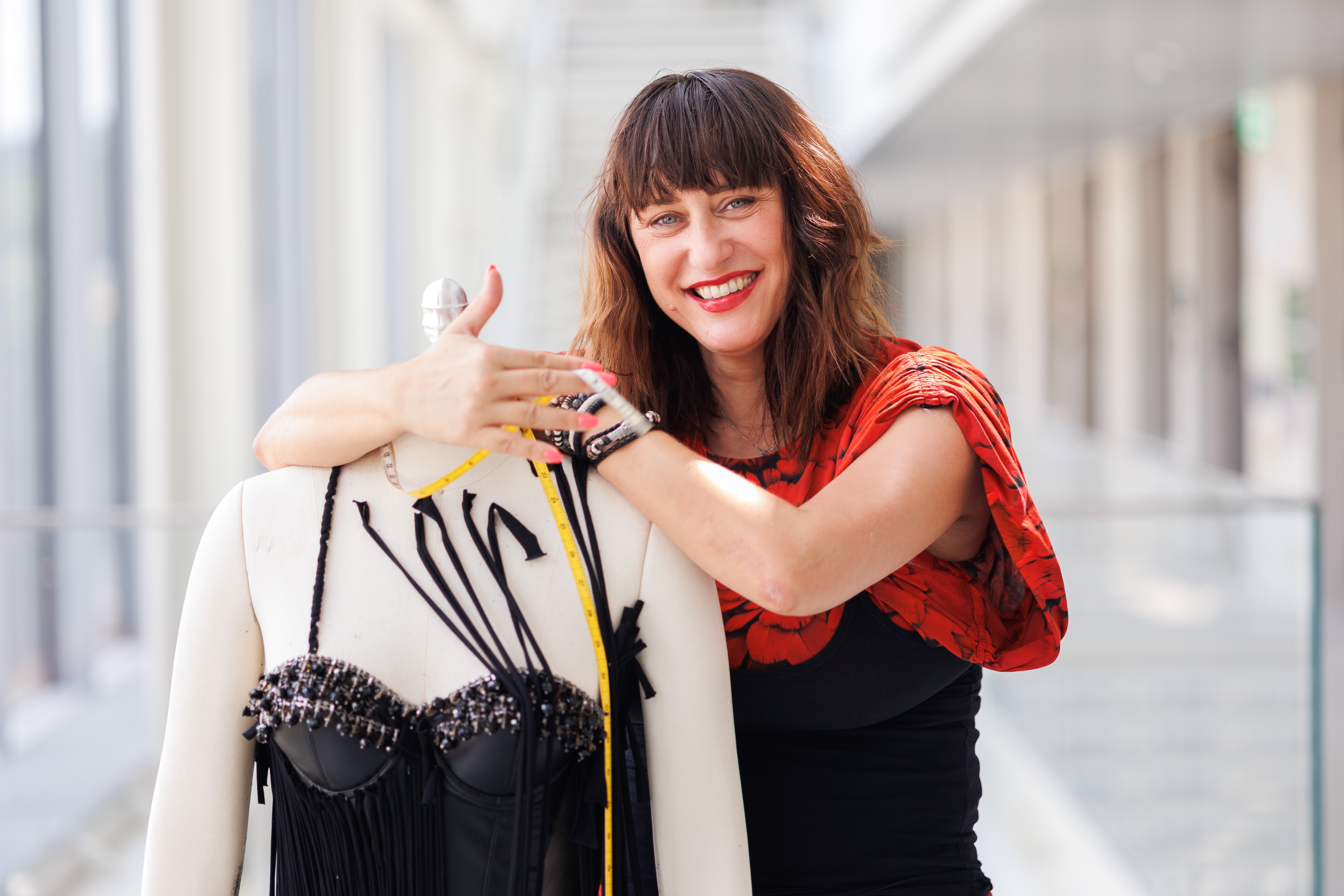
MATEA BENEDETTI (Slovenia) is a fashion designer, full professor, and founder of the Benedetti Life brand, an internationally recognized sustainable luxury fashion label. In 2014, Sara Sozzani Maino of Vogue Italia selected Benedetti Life as one of the 20 most promising sustainable fashion brands in the world, recognizing its pioneering approach to sustainable luxury. Her creations have been featured on prestigious international red carpets, including the Academy Awards and the Cannes and Venice Film Festivals, and have been worn by numerous prominent figures. As a speaker, she regularly participates in international conferences and institutions, presenting on topics such as sustainability, innovation, and fashion, including at COP28 in Dubai, as well as in the Vatican and Brussels. Bentley Motors included Benedetti Life among its selected “Extraordinary Brands” in its centennial publication. Based between Ljubljana and Milan, she continues to advance sustainable luxury through innovative design and responsible fashion practices.
→ Get to know Matea Benedetti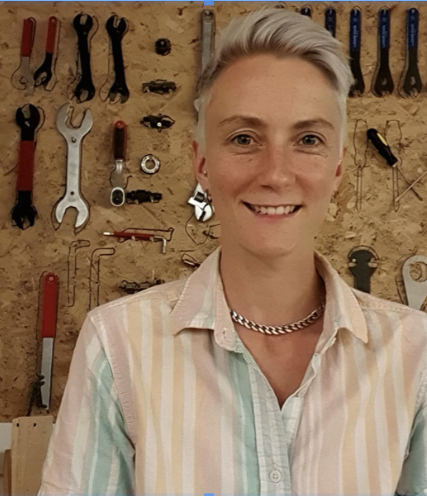
LARS PETROVA-TAYLOR (Spain) works at the intersection of people, non-human beings, spaces, and ideas, helping to turn good intentions into collective action. Their practice moves between maker culture, community activation, and systems thinking, using hands-on creation as a way to connect people and bring projects to life. They operate on both local and international levels—from coordinating Fab City networks to designing and leading creative learning programs and makerspaces across Europe. Their more than decade-long collaboration with underrepresented communities in the earlier stages of their career continues to strongly shape their approach to leadership, facilitation, and collaboration today. Rather than merely accepting differences, they emphasize the active celebration of equality, diversity, and inclusion, consistently embedding these values into all of their work.
→ Get to know Lars Petrova-Taylor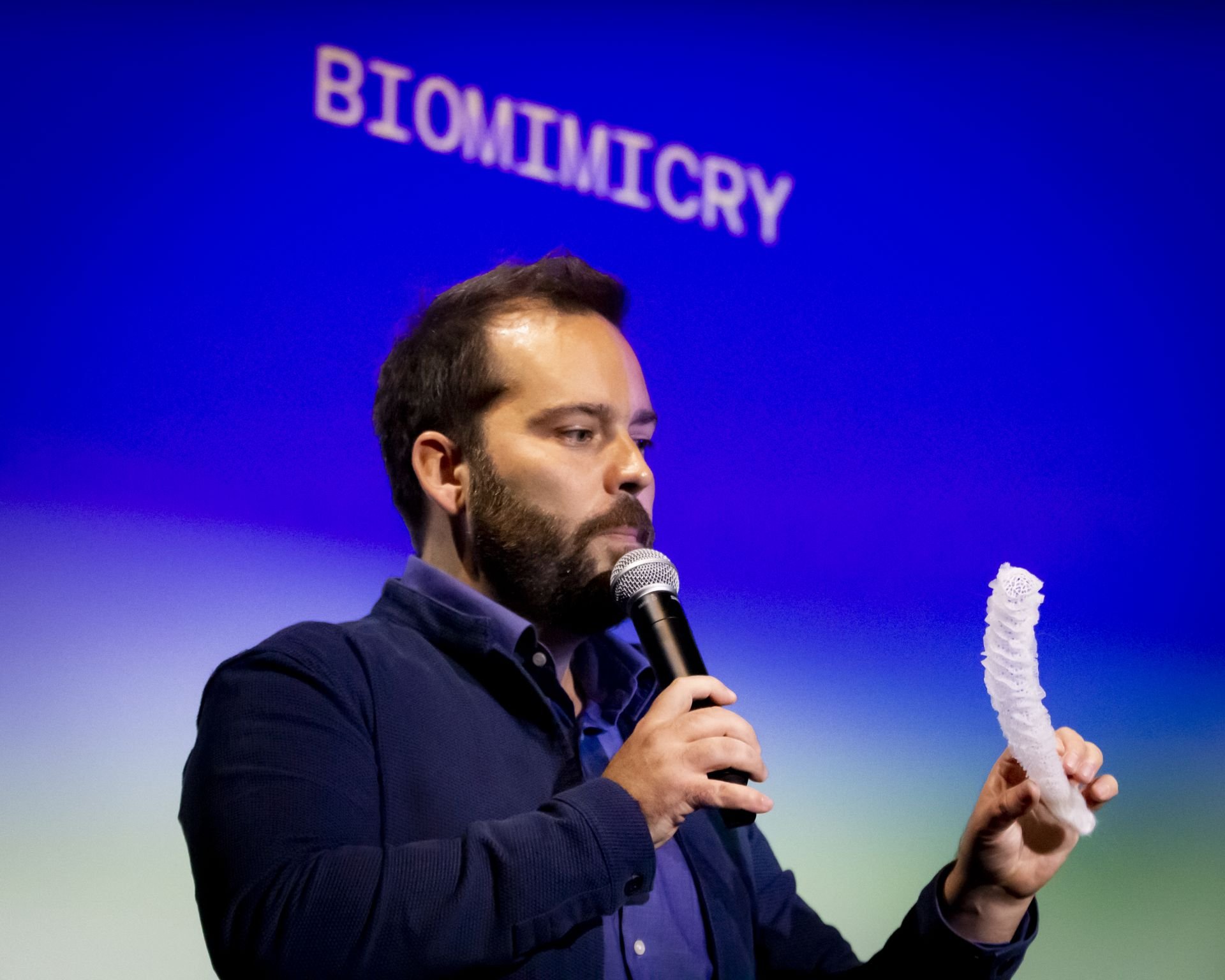
GUILLIAN GRAVES (France) is a designer and graduate of the Paris-based ENSCI–Les Ateliers, where he completed his studies in collaboration with École Polytechnique Fédérale de Lausanne (EPFL). He leads the Big Bang Project studio, where designers, engineers, and scientists develop innovative, nature-inspired solutions to the challenges of the future. As an educator, he works at ENSCI–Les Ateliers as the head of the specialized Master’s program in Nature-Inspired Design and of the Phusis Lab, and collaborates with the Centre de Recherche en Design. His work in the fields of bioinspiration, biomimicry, and biodesign has been presented at more than 450 conferences across Europe, the United States, Asia, and the Middle East, and exhibited in 21 cities across nine countries, including at the Centre Pompidou, the MAK Museum in Vienna, and during New York Design Week. His projects have been featured in Wired, Le Monde, and other international media outlets. In 2024, Vogue named him one of the 100 most influential innovators of the year.
→ Get to know Guillian Graves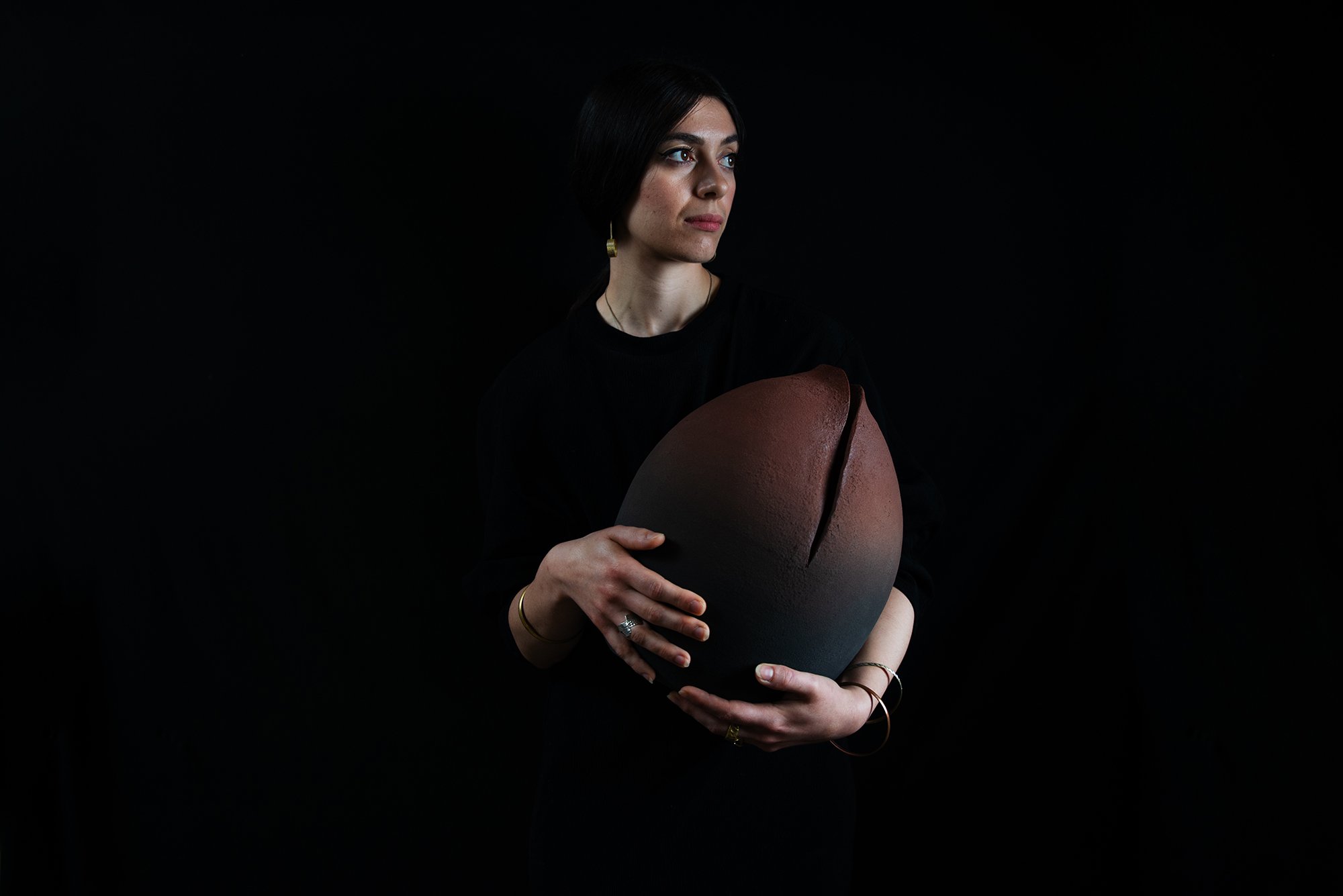
SARA BOLOGNA (Italy) is a designer and researcher based in Milan, working at the intersection of material cultures, anthropology, and narrative design. Her practice spans product design and curation to collaborations with craft communities across Europe and Africa, where she uses design as a tool to activate local material knowledge. This work was also recognized through its inclusion in the ADI Design Index 2024 – Compasso d’Oro, one of the world’s most prestigious design awards. She lectures at several universities, including Politecnico di Milano, IULM, and The Royal Institute of Traditional Arts in Riyadh, and is a member of the MADEC – Material Design Cultures Research Group at Politecnico di Milano. Her work has been featured in leading design publications and international exhibitions. In 2026, together with Luca Gruber, with whom she co-founded the design-art practice BGGB Studio, she is a designer-in-residence at Centre Rog.
→ Get to know Sara Bologna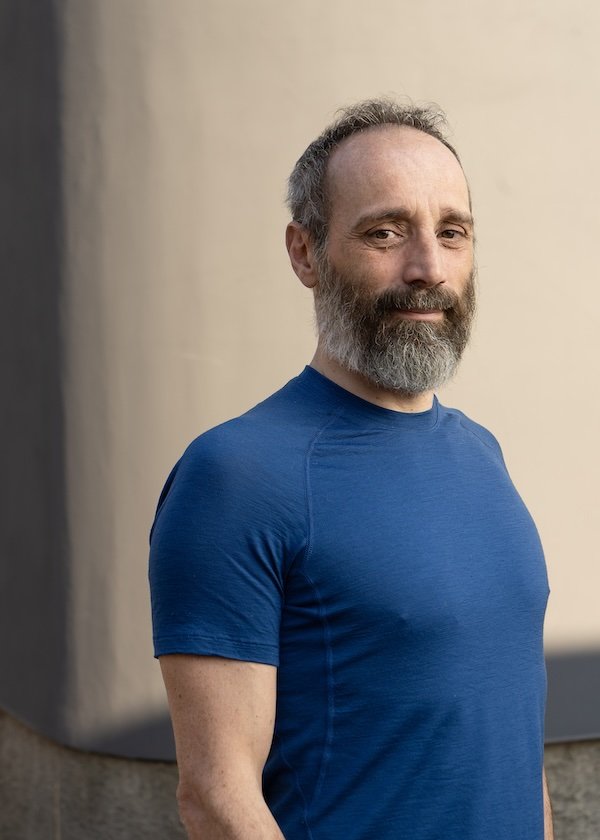
ALESSANDRO MASSERDOTTI (Italy) is a philosopher and interaction designer who connects philosophical thinking, technology, and design. During his studies in philosophy, with a focus on the philosophy of science, he also explored photography, video, and programming. In 2002, he began working in the field of interactive systems and responsive environments, researching and developing new forms of interaction between humans and technology. In 2004, he co-founded the design studio dotdotdot with three partners, where he spent a decade developing innovative projects grounded in an open-source philosophy. In 2014, he founded Opendot, a fablab and innovation platform dedicated to connecting companies with an open culture of collaboration, co-creation, and innovation. In his work, he prefers to operate in multidisciplinary environments, where he weaves together knowledge of philosophy and programming with design, architecture, and the exploration of new ways for humans and technology to coexist.
→ Get to know Alessandro MasserdottiRog Creathon 2026 is supported by the international CraftWork 4.0 All project, co-funded by the European Union and the Slovenian Ministry of Foreign and European Affairs.

Frequently Asked Questions
- I find all the challenges interesting. Can I apply to all of them?
In the application form, you can select your preferred challenge as well as a second-choice alternative. The selection committee will consider both preferences when making final decisions. - Do I have to cover my own travel expenses to Ljubljana to attend the event?
If selected, Center Rog will cover your accommodation at Hostel Celica (23–27 November 2026), participation in Rog Creathon, and a ticket for Rog Forum (26–27 November 2026). However, you will need to cover your own travel expenses. We recommend exploring mobility grants such as Erasmus+ to help with travel costs. - How should I prepare the presentation video?
Create a video up to 3 minutes long introducing yourself to the jury. Tell us who you are, your areas of interest, what you do (professionally or as a hobby), and why you want to participate in your chosen challenge. Upload the video to a platform like YouTube, Vimeo, WeTransfer, or Google Drive, and share the public link in your application form. Please ensure the link is accessible without needing a request for permission. - Will food be provided during the event?
Yes! During Rog Creathon (Monday to Wednesday), breakfast, lunch, and dinner will be provided. On Thursday and Friday (during Rog Forum), lunch and snacks will be available. - Is there an application fee?
No, participation in Rog Creathon is completely free—there is no registration fee. - Can I get an invitation letter from Center Rog for administrative purposes?
Yes! If you are selected, we can provide an invitation letter upon request. - What is the Rog Creathon experience like?
Check out highlights and testimonials from the last edition here: Rog Creathon 2025
See more


LUDUS ARTISANAL
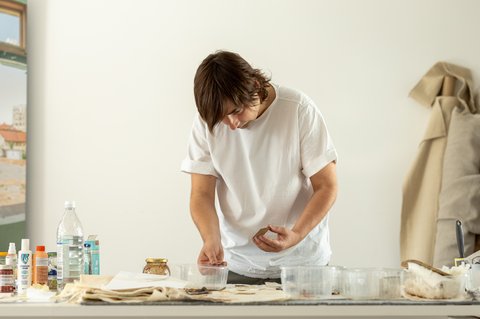
Ludus Artisanal marks a new chapter in the brand’s evolution, focusing on the recontextualization of ancient pre-industrial textile crafts from the Balkan and Mediterranean regions to create contemporary designer products. Making use of ...