
Bring a Sketchbook: discovering interspecies ecosystem in the the neighbourhood
27. 11. 2026
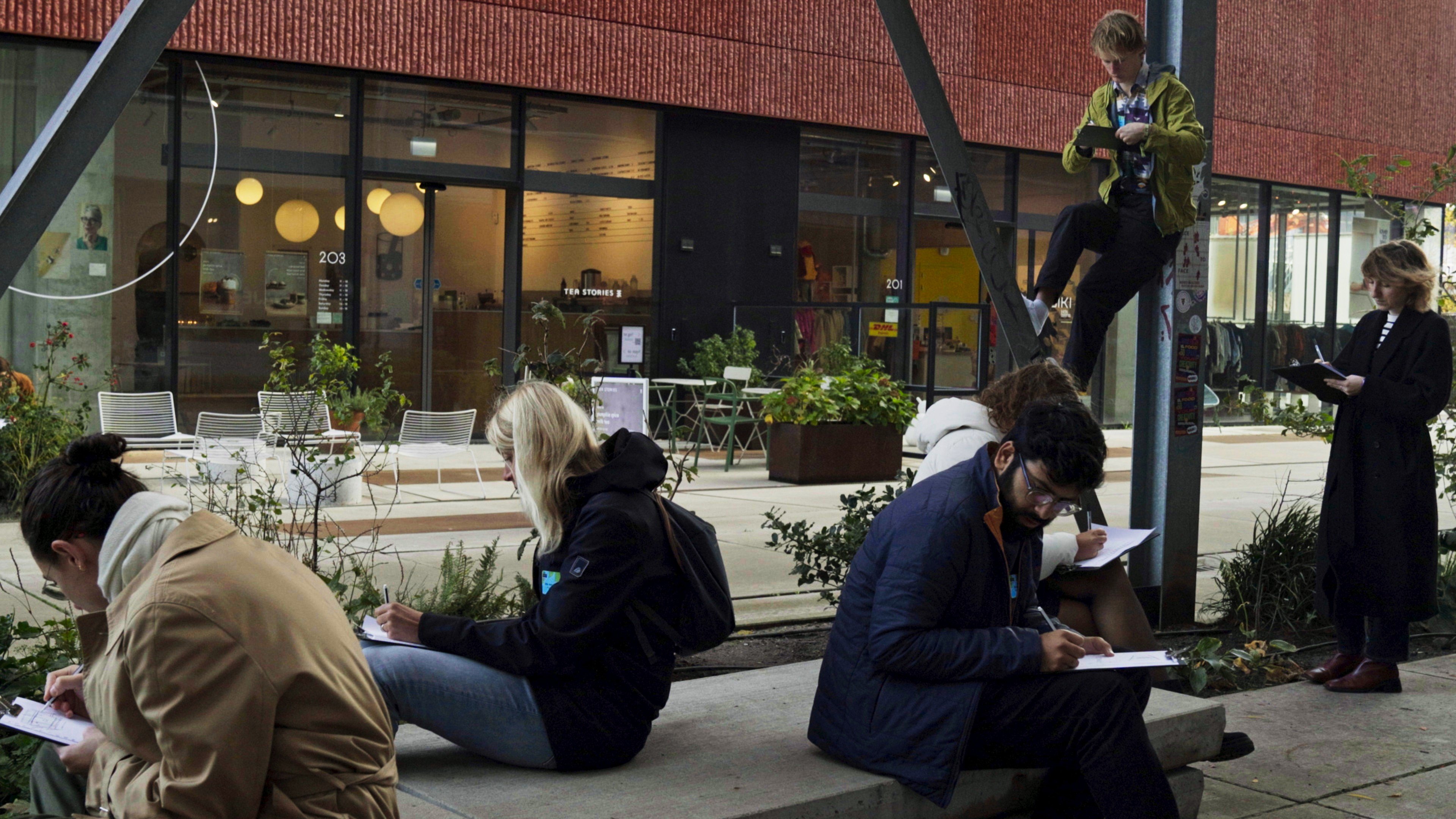
Take a look around you. What do you notice? Which plants, insects, or other species can you observe? The practice of noticing has been proposed as a first step towards raising our awareness of and developing our relationship with our ecological surroundings. Sketching has long been used as a tool to explore perspectives and study the world around us. In this workshop, sketching will be used as a tool for practicing noticing. The process of sketching elicits a state of heightened concentration, revealing unexpected findings and serendipitous encounters in unlikely places. The sketches themselves not only reveal what was or wasn’t captured, but also how the observation was captured. Reflecting on the choices made within the sketch using a structured approach can help uncover hidden insights and missing information, encouraging further noticing. Ultimately, the workshop reflects on how more-than-human participation in the design process is influenced by our perspective and the tools that shape it. No sketching experience is required, and sketchers of all skill levels are welcome.
***
Workshop facilitators are Youp Ferket, Oscar Tomico and Doenja Oogjes.
Youp Ferket recently started his PhD as part of the Regenerative Ecologies of Design and Production for the European Heritage project. As a designer and researcher, he is interested in researching and developing regenerative design practices, creating spaces for more-than-human participation in the design process. Last year, he graduated from the Industrial Design master’s programme at TU/e, with a focus on developing tools and practices for conducting multi-species ethnography, such as using sketching for noticing. Since then, he has published a pictorial based on his master’s thesis and worked on a documentary, experiences which he hopes to continue building on as part of his PhD.
Oscar Tomico is an associate professor at the Department of Industrial Design at Eindhoven University of Technology on Design Research Methodologies for Posthuman Sustainability. His research expands the context of human-centred design and positions designers as part of complex ecological systems. Building on his research on first-person research methodologies, he explores ecologies of design, production, and use, focusing on the impact they have on the coexistence and cohabitation with other-than-human actors, such as plants. He is currently involved in projects ranging from exploring more-than-human cohabitation in the greening of interior spaces through multi-species design, situating design practice as part of existing ecosystems, and analysing the impact of local regenerative social-ecological-technical systems of production.
Doenja Oogjes is an assistant professor in Industrial Design at Eindhoven University of Technology (TU/e) and a researcher in the field of human-computer interaction. Her work starts from the premise that technology is reshaping the world around us in ways we rarely stop to examine, especially when that world extends beyond the human. Her research moves through material dialogues with city trees, the company of bees, backyards as liminal spaces, and listening practices for waters running through her own neighbourhood, workshopping more-than-human practices across these sites. Grounded in feminist posthumanism, her work moves between theory, method, and design research practice, and is currently taking shape in MoTH Studio, a space she is co-establishing on campus for biomonitoring and situated research and teaching.
See more
Paxia
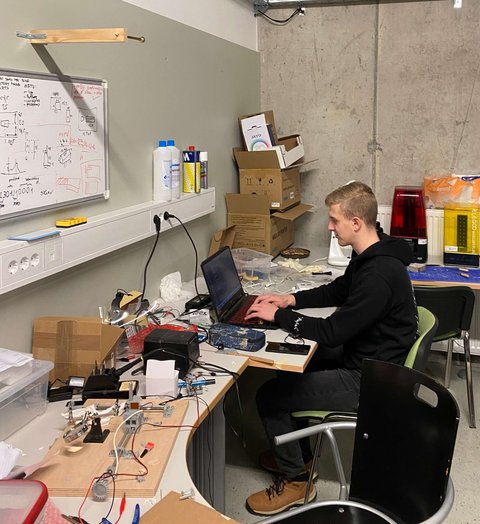
The Blue Voyager unmanned aerial vehicle is used for automated sampling of water sources and analysis of samples during flight. Behind the product is the startup Paxia, which consists of students Domen Trontelj, Tilen Šket and Rok Hladin...